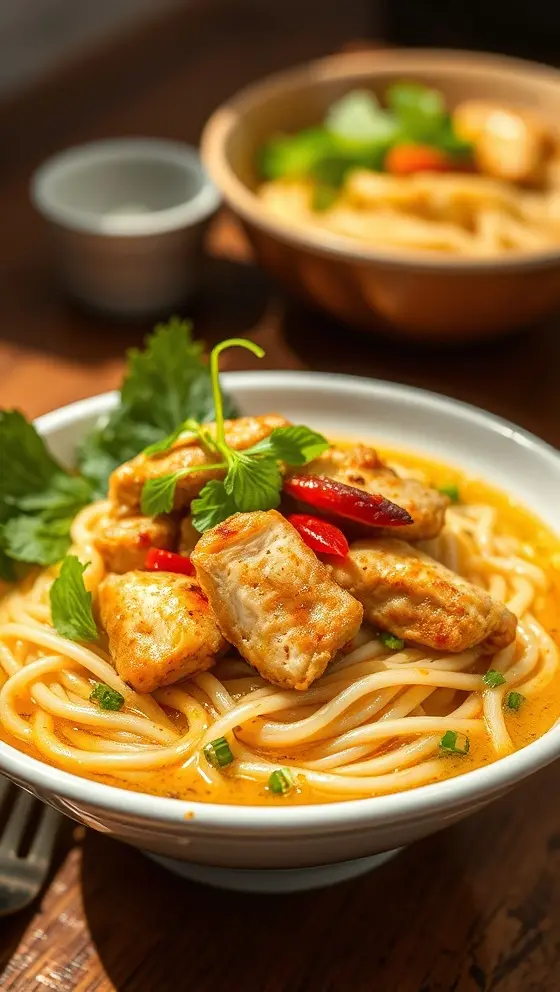
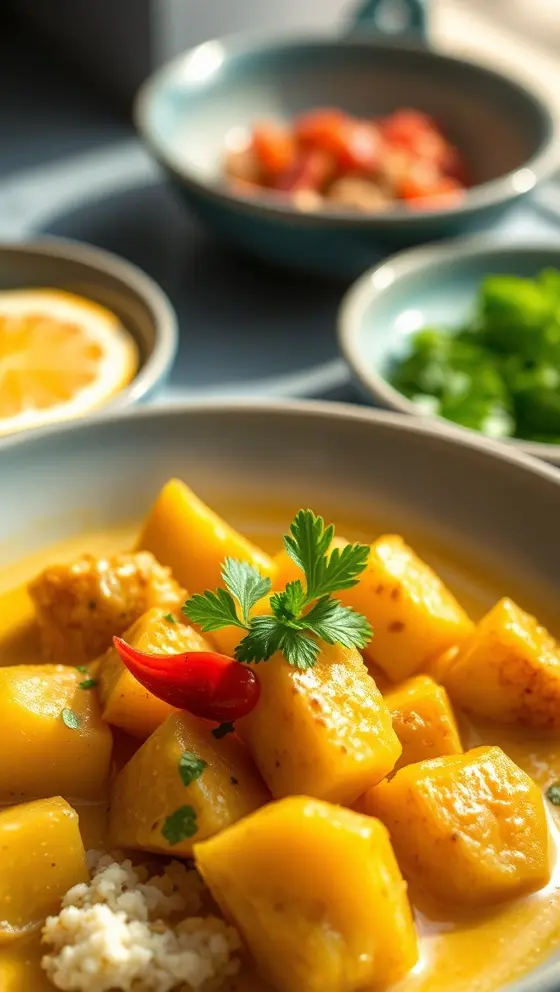
Thai Yellow Chicken Curry Recipe With Potatoes Easy Meal
Introduction
Are you ready to embark on a culinary journey that brings the vibrant flavors of Thailand right into your kitchen? This Thai Yellow Chicken Curry Recipe with Potatoes is not only easy to prepare, but it also boasts a rich array of flavors that will tantalize your taste buds. The combination of tender chicken pieces, creamy coconut milk, and aromatic spices makes this dish a go-to for busy weeknights or any gathering. Not only is it satisfying, but it is also packed with nutrients, making it a healthy choice for you and your family. Let’s dive into the ingredients and methods that will make this delightful dish come to life.
Ingredients List
To whip up this delicious Thai Yellow Chicken Curry with Potatoes, you’ll need the following ingredients:
– 500g boneless chicken thighs (cut into bite-sized pieces)
– 2 medium potatoes (peeled and diced)
– 1 can (400ml) coconut milk
– 2 tablespoons yellow curry paste
– 1 onion (sliced)
– 3 cloves of garlic (minced)
– 1-inch piece of ginger (grated)
– 2 tablespoons fish sauce
– 1 tablespoon sugar
– 1 tablespoon vegetable oil
– Fresh cilantro (for garnish)
– Lime wedges (for serving)
– Cooked jasmine rice (for serving)
This ingredients list highlights not only the essential components for your Thai Yellow Chicken Curry but also the versatility that allows you to adjust flavors to your liking.
Timing
Before you start, let’s discuss the timing involved in preparing this scrumptious meal. The total time required to make this curry is approximately 45 minutes.
– Prep Time: 15 minutes
– Cook Time: 30 minutes
Considering this time frame, you can have a delicious meal on the table in no time, making it a perfect option for both busy evenings and relaxed weekends.
Step-by-Step Instructions
Creating your Thai Yellow Chicken Curry with Potatoes is straightforward. Follow these step-by-step instructions for an effortless cooking experience:
1. Prepare Your Ingredients: Begin by washing and chopping all the vegetables. Ensure your chicken is cut into small, uniform pieces for even cooking.
2. Sauté Onions, Garlic, and Ginger: Heat the vegetable oil in a large pot over medium heat. Add the sliced onions and sauté for about 2-3 minutes until they become translucent. Then, add the minced garlic and grated ginger. Stir for an additional minute until fragrant.
3. Add the Yellow Curry Paste: Incorporate the yellow curry paste into the pot. Cook for about 2 minutes, stirring continuously, to release all of the aromatic spices that define this Thai dish.
4. Combine Chicken and Potatoes: Add the chicken pieces to the pot, stirring to coat them in the curry mixture. Allow the chicken to cook for about 5 minutes, until it starts to brown. Then, toss in the diced potatoes.
5. Pour in Coconut Milk: Pour the coconut milk over the chicken and potatoes. Stir in the fish sauce and sugar, mixing until fully incorporated.
6. Simmer for Flavor: Bring the mixture to a gentle simmer. Cover the pot and let it cook for about 20 minutes, or until the chicken is cooked through and the potatoes are tender.
7. Taste and Adjust: After 20 minutes, taste your curry. This is also the time to adjust seasoning by adding more fish sauce or sugar, depending on your taste preference.
8. Serve: Ladle the Thai Yellow Chicken Curry into bowls over cooked jasmine rice. Garnish with fresh cilantro and serve with lime wedges on the side for an added burst of flavor.
This simple yet delectable recipe showcases the ease of preparing a Thai Yellow Chicken Curry with Potatoes right in your own home, maximizing flavor with minimal effort.
Nutritional Information
For those who are conscious about their dietary intake, here is a rough estimate of the nutritional information per serving of the Thai Yellow Chicken Curry with Potatoes:
– Calories: 420
– Protein: 25g
– Carbohydrates: 40g
– Fat: 18g
– Fiber: 4g
– Sugar: 6g
These nutritional values may vary based on exact ingredients and serving sizes, but they offer a solid overview highlighting the health benefits this meal provides.
Tips
To elevate your cooking game and ensure your Thai Yellow Chicken Curry turns out perfectly, here are some useful tips to keep in mind:
– Choose Your Chicken Wisely: Opting for chicken thighs instead of breasts adds more moisture and flavor to the dish.
– Prep Ahead: If you’re short on time, consider prepping your ingredients the night before. Chop vegetables and marinate the chicken to deepen the flavor.
– Control the Heat: Adjust the amount of yellow curry paste based on your spice tolerance. You can start with less and add more as desired.
By following these helpful tips, you’ll have a more enjoyable cooking experience and an even more satisfying dish.
Alternative Methods
Incorporating alternative methods can also provide you with different takes on this classic Thai Yellow Chicken Curry. Some popular variations include:
– Vegetarian Version: Substitute chicken with tofu or chickpeas, and use vegetable stock for a meatless alternative.
– Add Other Vegetables: Feel free to add vegetables like carrots, bell peppers, or green beans for extra nutrition and flavors.
– Use Slow Cooker: For a hands-off approach, throw all the ingredients into a slow cooker and let it work its magic while you go about your day.
Exploring these alternative methods allows you to customize the dish based on dietary needs or preferences while maintaining the essence of traditional Thai cuisine.
Common Mistakes to Avoid
While making a dish as flavor-rich as Thai Yellow Chicken Curry is relatively straightforward, there are some common mistakes that could frustrate your cooking experience:
– Skipping the Sauté: Failing to properly sauté the onions, garlic, and curry paste can result in a bland flavor. This step is crucial for enhancing the taste profile of the dish.
– Not Using Enough Spice: The yellow curry paste is the star of this recipe, so underestimating its importance could lead to a less flavorful curry. Be generous but taste-test along the way!
– Overcooking Chicken: Ensure that you don’t allow the chicken to overcook; keep an eye on it as it simmers to maintain its tenderness.
Avoiding these common pitfalls will ensure that your Thai Yellow Chicken Curry is flavorful and enjoyable.
Conclusion
Cooking this Thai Yellow Chicken Curry Recipe with Potatoes is not just simple; it’s a delightful way to connect with Thai cuisine. The harmonious blend of curry spices, creamy coconut, and tender chicken will have you craving seconds. Moreover, each step is an opportunity to unleash your creativity in the kitchen, allowing you to adjust seasonings and incorporate your favorite items. If you’ve enjoyed this recipe, I invite you to return to my website for more dishes that inspire flavor and creativity in your cooking journey.
FAQs
Can I make this dish ahead of time? Yes! You can prepare the curry and store it in the refrigerator for up to 3 days. Reheat before serving for best results.
Is this dish gluten-free? Yes, as long as the curry paste and fish sauce you use are gluten-free, this dish is safe for those with gluten sensitivities.
What can I serve with this curry? This dish pairs beautifully with jasmine rice, but you can also try serving it with quinoa or cauliflower rice for a lower-carb option.
By preparing this appealing dish, you’re not just enjoying a meal; you’re embracing a part of Thailand’s culinary heritage while enjoying quality time with those you love. Happy cooking!
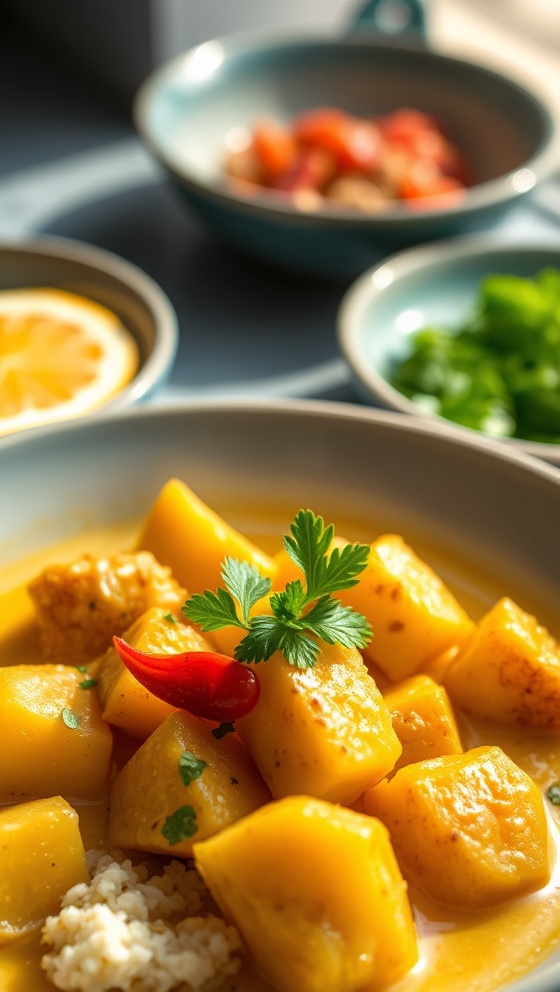
Thai Yellow Chicken Curry Recipe With Potatoes Easy Meal
Ingredients
- 1 lb chicken, cut into pieces
- 2 medium potatoes, diced
- 1 can coconut milk
- 2 tbsp yellow curry paste
- 1 onion, chopped
- 2 cloves garlic, minced
- 1 tbsp fish sauce
- Fresh basil for garnish
Instructions
- Heat oil in a pot and sauté onion and garlic until fragrant.
- Add chicken pieces and cook until browned.
- Stir in yellow curry paste and cook for 2 minutes.
- Add diced potatoes and coconut milk, bring to a simmer.
- Cook for 20 minutes until potatoes are tender.
- Stir in fish sauce and garnish with fresh basil before serving.
Nutrition Information
- Calories: 450 kcal
- Protein: 30 g